
Health
Your Sleep Schedule Is Broken — How to Fix It After Daylight Saving Time


Your alarm goes off. You stare at the ceiling, absolutely certain it’s lying to you. It’s barely light outside. Your body is screaming that it’s 6 AM, but your phone — that traitor — insists it’s 7. You drag yourself through the morning anyway, and for the rest of the day, everything feels slightly off. You’re slow to respond, irritable for no real reason, and by 3 PM, you’re ready to curl up under your desk.
If this sounds familiar, congratulations: you’ve just experienced the biannual ritual that is daylight saving time. And this year, you’re not just imagining it — the grogginess is real, and science is finally backing you up.
Why “Just One Hour” Hits Harder Than You Think
Here’s the thing most people get wrong about the spring time change: they treat it like a minor inconvenience. Set your clock, lose an hour, move on. But your circadian rhythm — your body’s internal 24-hour clock that manages everything from hormone release to body temperature to digestion — doesn’t work that way. It’s not an alarm clock you can just adjust by pressing a button. It’s more like an orchestra where every instrument needs to stay in sync, and suddenly the conductor shifted the tempo by an hour with no rehearsal.
A major 2025 study from Stanford University, published in PNAS, compared three time policies across the entire United States: permanent standard time, permanent daylight saving time, and our current twice-a-year switching. The findings were blunt. “Staying in standard time or staying in daylight saving time is definitely better than switching twice a year,” said Jamie Zeitzer, PhD, the study’s senior author [1]. The researchers estimated that permanent standard time alone would prevent roughly 300,000 strokes and reduce obesity by 2.6 million cases annually, compared to the current system [1].
The American Heart Association has also weighed in. Sleep is now one of their “Life’s Essential 8” metrics for cardiovascular health, and they’ve explicitly warned that the transition period after springing forward correlates with measurable spikes in heart attacks and strokes [2].
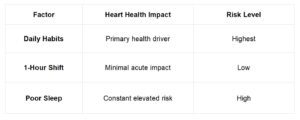
Now, a team at Duke University did offer a counterpoint worth mentioning: their 2025 analysis of 170,000 patients suggests that your long-term sleep habits matter far more than a single one-hour shift. People who consistently sleep poorly are at higher risk regardless of what the clock says [3]. Fair enough — but tell that to the version of you nodding off during your Monday morning meeting. In the short term, you still feel like a walking zombie, and “it’s just one hour” doesn’t make the fog lift any faster.
The 5-Step Recovery Plan (What Actually Works)
Most people try to fix their sleep schedule after DST the wrong way. They stay up late, sleep in on weekends, and wonder why they feel worse by the following Monday. Here’s what the science says actually helps, in order of impact:
Step 1: Get Bright Light First Thing in the Morning
This is the single most powerful thing you can do. Within 30 minutes of waking up, expose your eyes to bright, natural light. Step outside, sit near a window, or if you’re in an office with no natural light, consider a light therapy lamp. Morning light is the strongest signal your body uses to calibrate its circadian clock. It suppresses melatonin production, tells your brain “it’s daytime,” and starts a countdown timer for when melatonin should ramp up again that evening.
The Stanford researchers specifically highlighted that morning light exposure — which is most abundant under standard time — is what makes permanent standard time the healthiest option for the largest number of people [1]. You can’t control time policy, but you can control your morning routine.
Step 2: Lock In Your Wake-Up Time
Your body adapts fastest when the wake-up time stays rock solid. Resist the urge to sleep in “just this once” — even on weekends. Variable wake times confuse your circadian system further and extend the adaptation period. Pick a time, and stick to it for at least a week. Your body will eventually catch up.
Step 3: Manage Your Evening Light
Here’s where most people sabotage themselves without realizing it. You’ve done everything right all day — morning light, consistent schedule, maybe even a walk after dinner. Then at 9 PM, you park yourself in front of a laptop or phone, and all that progress goes out the window.
Blue and green light emitted by screens suppress melatonin production—exactly what you don’t need when fighting a misaligned biological clock. A practical solution is wearing sleep support glasses in the evening. They block approximately 99% of light in the 400–580nm range during your normal screen activities. The core logic isn’t to force you to sleep, but to prevent electronic devices from tricking your brain into thinking the sun hasn’t set yet.[4][5].
Step 4: The 15-Minute Gradual Shift
If you’re reading this and you’re still struggling a week or two after the change, don’t panic. You can “pre-pay” the adjustment by shifting your bedtime 15 minutes earlier each night. Over three or four days, you’ll land at the new schedule without the shock of a single big jump. This is essentially the approach recommended by the Sleep Foundation, and it works [6].
Step 5: Stop Chasing “Lost Sleep”
This might be the hardest one. Weekend sleep-ins feel like they help, but they actually make things worse. Sleeping until noon on Saturday shifts your entire rhythm backward, so by Monday morning, your body is even more confused than before. Think of your circadian rhythm as a pendulum — every time you give it a big push, it takes longer to settle. Small, consistent movements beat dramatic corrections every time.
Why This Year Feels Different
There’s a broader conversation happening right now. The Stanford study landed in September 2025 and made national headlines. The Sunshine Protection Act — which would make daylight saving time permanent — has been bouncing around Congress for years. The American Academy of Sleep Medicine officially supports permanent standard time. In other words, the experts agree that the switching itself is the problem, even if they can’t agree on what to replace it with.
But Congress hasn’t fixed this yet, so you need to. And the good news is that your body will adapt — it just needs the right signals to do it faster and with less misery.
Putting Your Clock Back in Sync
The first week after springing forward is genuinely unpleasant, and no amount of positive thinking changes that. But the science is clear on what helps: morning light to anchor your clock, a consistent wake time, evening light management to protect melatonin production, and patience. For extra-sensitive individuals — people whose sleep already runs on a razor’s edge, or those recovering from shift work, jet lag, or just a really rough DST transition — the stronger signal of a red lens like Night Ease™ Red, which blocks 99.89% of blue and green light, can make a noticeable difference in how quickly your rhythm resets [5][7].
Your body will figure it out eventually. But with the right approach, you don’t have to suffer through a full two weeks of brain fog to get there. Your clock will sync up — you just need to show it which way to point.
References
- Weed, L., Zeitzer, J.M. et al. (2025). Circadian and health consequences of permanent daylight saving time, permanent standard time, and biannual clock changes in the United States. Proceedings of the National Academy of Sciences.
- American Heart Association. (2026). Life’s Essential 8 — Sleep.
- Duke University School of Medicine. (2025). Daylight Saving Time May Not Trigger Heart Attacks After All, Study Finds.
- Luna-Rangel, F.A. et al. (2025). Efficacy of blue-light blocking glasses on actigraphic sleep outcomes: A systematic review and meta-analysis. Frontiers in Neurology, 16:1492595.
- Glickman, G.L. et al. (2025). Optimizing the potential utility of blue-blocking glasses for sleep and circadian health: A systematic review. Translational Vision Science & Technology.
- Sleep Foundation. (2026). How to Prepare for the Start and End of Daylight Saving Time.
- Shechter, A. et al. (2018). Blocking nocturnal blue light for insomnia: A randomized controlled trial. Journal of Psychiatric Research, 96:1–8.
You May Also Read : Candizi: What It Is, Benefits, Uses, and How to Get the Best Results


Many people try popular diets hoping for quick results, only to find the weight returns or the plan becomes difficult to maintain. Medical weight loss offers a more structured path, guided by clinical evaluation, realistic goals, and ongoing monitoring.
Programs for medical weight loss Florida typically focus on the reasons weight gain happens, not just the number on the scale. This can include metabolism, hormones, medications, sleep, stress, eating patterns, and activity level.
Fad Diets Often Miss the Bigger Picture
Fad diets usually focus on restriction. They may remove entire food groups, promise rapid results, or rely on strict rules that are difficult to follow long term. While some people lose weight at first, the approach may not support lasting health.
Medical weight loss takes a broader view. A clinician may evaluate health history, lab markers, body composition, and lifestyle habits. This helps identify barriers that a standard diet plan may overlook.
Common Limits of Short-Term Diet Plans
- They may be too restrictive for daily life
- They often do not address medical conditions
- They can lead to cycles of weight loss and regain
- They may not provide enough protein or nutrients
- They rarely include long-term maintenance planning
Personalization Matters
Weight management is not the same for everyone. Age, hormones, muscle mass, insulin response, medications, and daily routines all influence progress. A personalized plan can help match strategies to a person’s actual needs.
This may involve nutrition guidance, physical activity planning, metabolic support, behavioral strategies, and, when appropriate, prescription medication. The goal is not perfection. The goal is steady progress that fits real life.
Medical Oversight Can Improve Safety
Some diets can be risky for people with chronic conditions or those taking certain medications. Very low-calorie plans, extreme carbohydrate restriction, or supplement-heavy programs may affect blood sugar, blood pressure, digestion, or energy levels.
Medical supervision helps reduce unnecessary risk. Health markers can be reviewed over time, and the plan can be adjusted when progress slows, side effects occur, or health needs change.
Support Beyond the Scale
Fad diets often measure success only by pounds lost. Medical weight loss may also consider waist measurement, energy, sleep quality, blood pressure, glucose control, cholesterol, mobility, and appetite regulation.
This wider view can help people stay motivated, especially when scale changes are gradual. Improvements in daily function and health markers may show that meaningful progress is happening.
How Peptide Therapy May Fit Into Weight Management
Some medically supervised plans include therapies that support metabolism, recovery, appetite signaling, or body composition. Interest in peptide therapy Florida has grown as people look for options that may complement nutrition and lifestyle changes.
Peptides are short chains of amino acids that help signal different processes in the body. They are not a replacement for healthy habits, and suitability depends on individual health status, goals, and clinical judgment.
Long-Term Maintenance Is a Key Difference
Many fad diets focus heavily on the first few weeks. Medical weight loss usually places more emphasis on what happens after weight is lost. Maintenance planning may include meal structure, resistance training, sleep improvement, stress management, and follow-up monitoring.
This is important because weight regain is common when old habits return. A practical maintenance plan helps people understand how to respond to plateaus, travel, schedule changes, and appetite shifts.
Building a Sustainable Relationship With Food
A medically guided approach does not have to mean rigid eating. Many plans emphasize balanced meals, adequate protein, fiber-rich foods, hydration, and flexible choices. This can reduce the all-or-nothing mindset that often comes with dieting.
People often choose medical weight loss because they want a plan based on health, not trends. With individualized guidance, realistic expectations, and careful monitoring, weight management can become more sustainable and less confusing.
You May Also Read : How Sandy Springs Families Can Prove Nursing Home Negligence In Court

Women’s healthcare is rapidly moving away from standardized, provider-driven models in order to better serve diverse populations with specialized needs. Today, providers emphasize listening to patients and making care decisions collaboratively, aiming to foster trust and empower every woman. For those seeking reproductive health options, comprehensive services at abortion clinics in Detroit are part of this broader shift, offering care that prioritizes comfort and choice while respecting each patient’s values and experiences.
This patient-centered approach is gaining traction not only because it improves individual outcomes but also because it leads to greater satisfaction and engagement across all demographics. Healthcare practitioners are now more likely to collaborate with women in all stages of life, incorporating their preferences into care plans and ensuring accessibility to important preventive services, including screenings and counseling.
By prioritizing patients’ perspectives, today’s women’s health professionals create an environment where communication flows freely and trust builds over time. This results in treatments that are not only more appropriate for each patient but are also more effective overall. Women increasingly expect their health providers to provide holistic, personalized services, and medical centers are rising to meet this demand through new care models and expanded offerings.
Nationally recognized initiatives, such as those recommended by the American College of Obstetricians and Gynecologists, are modernizing standards of care to reflect this trend, ensuring that quality and access improve for women everywhere. This shift is supported by leading research and by patients’ experiences demonstrating the benefits of such an approach.
Understanding Patient-Centered Care
Patient-centered care in women’s health focuses on recognizing each woman as an individual, understanding her history, values, and circumstances. Unlike traditional models that might set rigid schedules and protocols, patient-centered models stress flexibility and adaptability. The aim is to cultivate a partnership between patient and provider, empowering women to take a proactive role in their health decisions rather than being passive recipients of care.
The Importance of Comprehensive Services
Access to a broad range of services in one place is essential for ensuring continuity and convenience in women’s care. For example, the model employed by centers such as the Carolyn Rowan Center for Women’s Health and Wellness brings together expertise across disciplines, including obstetrics, gynecology, endocrinology, and cardiology, in a single, integrated setting. This structure allows specialists to communicate more efficiently, helping to create a holistic care plan tailored to each woman’s needs and reducing the burden of navigating fragmented health systems.
Innovations in Prenatal Care
Prenatal care is another area undergoing major change to better serve both mothers and babies. Rather than adhering rigidly to outdated visit schedules, current recommendations support personalized, need-driven visit frequencies. The American College of Obstetricians and Gynecologists suggests fewer, longer prenatal visits for women with average- or low-risk pregnancies, focusing on proven interventions that improve outcomes. This individualized approach not only addresses concerns about access and convenience but also helps to close gaps in outcomes, particularly for women who have historically experienced poorer access to maternity care.
Addressing Health Disparities
Reducing inequities remains a top priority for many women’s health advocates. Providers are increasingly attentive to the challenges faced by patients with disabilities or from minority backgrounds and are developing best practices to ensure all women receive equitable, respectful care. Awareness of bias and commitment to continuous education among health professionals are key strategies to overcoming longstanding disparities in outcomes. National organizations encourage providers to routinely assess and adapt their protocols to meet the evolving needs of every patient, as discussed in recent guidance from the American College of Obstetricians and Gynecologists.
Expanding Access to Care
Improved access is fundamental to patient-centered care. For women in underserved areas or with limited mobility, new clinics and expanded telehealth offerings are increasingly common solutions. The recent opening of the Center for Women’s Health West Mobile, for example, demonstrates a commitment to bringing essential health services, including gynecologic care, prenatal and postpartum care, and preventive screenings, directly to those who need them most. Such efforts help bridge care gaps and ensure that no woman is left behind due to logistical, physical, or socioeconomic barriers.
Integrating Technology in Women’s Health
Digital health innovations make it easier for women to participate actively in their care, whether through secure electronic health records, virtual consultations, or advanced artificial intelligence tools. Technologies like speech-based AI systems can assist women in documenting symptoms, monitoring progress, and communicating with providers more effectively—especially in low-resource settings. These advances lower barriers to care, boost patient engagement, and help track and improve health outcomes over time.
Conclusion
The transformation toward patient-centered care in women’s health is a powerful movement that seeks to center the lived experiences and perspectives of every patient. By offering coordinated, comprehensive services, incorporating cutting-edge technology, and vigilantly addressing disparities, health systems are better equipped than ever to meet women where they are. These advancements promise not only improved health outcomes but a more compassionate and empowering experience for women at every stage of life.
You May Also Read : Understanding Waveform Analysis in Electronic Testing

Your oral health is about more than just having a bright smile. It is a key factor in your overall wellness, from preventing diseases to boosting your confidence in everyday life. Professional teeth cleaning goes beyond what you can do at home, removing stubborn plaque and reducing your risk of serious dental conditions. If you are wondering when to book your next dental appointment, be on the lookout for clear warning signs. Residents seeking expert teeth cleaning services can greatly benefit from a timely visit to their dentist.
Many people neglect regular dental cleanings until discomfort arises, but catching issues early can significantly impact their long-term oral health. Monitoring for certain symptoms between dental visits not only protects your teeth and gums but also helps prevent costlier treatments down the road. This article highlights the five most common signs it is time to prioritize your next professional cleaning.
1. Bleeding or Swollen Gums
If you notice your gums are bleeding when you brush or floss, this is not normal and should not be ignored. Swelling, redness, and tenderness are all early signs of gum disease (gingivitis), which can develop from neglecting professional cleanings. Routine cleanings remove the harmful bacteria and plaque that irritate your gums, helping to keep gum disease at bay.
2. Persistent Bad Breath or Unpleasant Taste
Occasional bad breath can happen to anyone, but if it becomes a frequent problem or you notice an unpleasant taste in your mouth that will not go away, it could signal ongoing bacterial buildup. Even diligent home brushing may not fully remove bacteria trapped below the gumline. A dental cleaning can target these stubborn areas to help you achieve fresher breath and a healthier mouth. Regular visits help ensure this issue is far less likely to become chronic.
3. Tooth Sensitivity or Pain
Increased sensitivity to hot or cold foods, as well as spontaneous tooth pain, are signs that should not be ignored. These symptoms could result from enamel erosion, cavities, or gum recession, all of which are addressed during professional cleanings. Dental hygienists can spot areas of concern, remove harmful buildup, and provide preventive treatments like fluoride to strengthen your teeth.
4. Noticeable Plaque or Tartar Buildup
If you notice a sticky, fuzzy film on your teeth that doesn’t come off with regular brushing and flossing, you may have plaque or tartar buildup. Tartar is hardened plaque that cannot be removed at home and requires professional tools for proper cleaning. Left untreated, tartar can contribute to cavities, enamel erosion, and gum irritation. According to the American Dental Association, removing tartar during professional cleanings helps protect your teeth from future damage.
5. It Has Been Six Months or Longer Since Your Last Cleaning
Even if you do not notice any obvious signs or symptoms, the passage of 6 months or more since your last dental cleaning is a prompt to book an appointment. Biannual visits are the gold standard for most people. However, individuals with certain conditions, like diabetes or a history of gum disease, may need more frequent visits. Consistent professional cleanings are essential for intercepting dental issues early and maintaining optimal oral health. You can find more information on dental visit recommendations from Healthline.
Why Regular Cleanings Matter
Skipping dental appointments does not just impact your smile. Poor oral health has been linked to conditions such as cardiovascular disease and diabetes. By scheduling regular cleanings, you are investing in your health, preventing oral diseases, and preserving your natural teeth for longer. As your dental provider evaluates your mouth during cleanings, they can also catch early warning signs of non-dental health issues.
Next Steps for Oral Health
If you recognize any of these five signs, do not wait for the problem to worsen. Call your dental office today to set up your next cleaning. In between visits, maintain excellent oral hygiene by brushing twice daily, flossing each day, and using an antimicrobial mouth rinse. Remember that professional and at-home care work together for your best oral health.
Being proactive in scheduling your teeth cleanings will help you enjoy a healthy smile and prevent complications that might otherwise require more extensive treatments. Listen to the signals your mouth sends you, and give your oral health the attention it deserves.
You May Also Read : How Healthcare AI Chatbots Improve Patient Engagement Without Violating Privacy Laws
-

 Business4 months ago
Image Search Techniques: Smarter Ways to Find Accurate Visual Results Online
-
Health3 months ago
Why Are So Many Autistic Girls and Women Still Missing Out on Early Identification?
-

 Lifestyle6 months ago
Sustainable Ways to Buy and Sell Antiques
-

 Sports3 months ago
Ultimate Pragmatic Juara100.org Medal Achievement Guide for Maximum Rewards
-

 Health4 months ago
Pravi Celer: Benefits, Uses, and How to Add It to Your Daily Diet
-

 Technology4 months ago
TabooTube: What It Is, How It Works, and Whether It’s Worth Your Time
-

 Business4 months ago
Understanding the Idaho Policy Institute Formal Eviction Rate 2020 Shoshone County: Housing Stability Insights
-

 Technology6 months ago
Top Features of ProgramGeeks Social You Didn’t Know About