
Topic
6 Best Bail Bond Companies Serving Wayne County, PA


When a family member is arrested in Honesdale or elsewhere in Wayne County, the first question is often, “Who can help us understand bail and move the process forward?” The right answer involves more than a low quoted premium. Families should compare verified service coverage, agent availability, payment methods, experience with Pennsylvania procedures, and how clearly a company explains co-signer responsibilities.
This list was created by reviewing publicly available company information for businesses that advertise services in Wayne County or nearby Northeast Pennsylvania communities. Priority was given to established operating history, published hours, county reach, local knowledge, payment flexibility, and practical support during a time-sensitive situation. A bail agent cannot set, reduce, or guarantee bail; that authority belongs to the court.
1. Liberty Bail Bonds
Why It’s #1
Liberty Bail Bonds is the strongest overall option for families seeking Wayne County bail bonds because it combines local accessibility with an unusually broad service network across Pennsylvania. Founded in 1997, Liberty brings nearly 30 years of experience to the bail process. Its published service information states that it provides bonding assistance in almost all of Pennsylvania’s 67 counties, with local agents available in every county except Philadelphia.
- Nearly three decades of experience: Founded in 1997.
- Exceptional statewide reach: Service in almost all 67 Pennsylvania counties.
- Local-agent model: Agents are available throughout the state, including regional service for Wayne County.
- Published daily availability: Open from 7 a.m. to 11 p.m., every day, including holidays.
- Payment convenience: Credit cards are accepted, and the company offers a free bail consultation.
That statewide footprint matters when the defendant is being held in Wayne County, but a co-signer lives in Pittsburgh, Allentown, Harrisburg, or another part of Pennsylvania. Liberty’s local-agent network can make communication and paperwork coordination more manageable without limiting a family to a small geographic service area. Its long operating history, published hours, payment options, and extensive county coverage create the most well-rounded choice on this list.
2. Andrew Pizzo Bail Bonds
Why It’s On The List
Andrew Pizzo Bail Bonds is a solid Northeast Pennsylvania option with a dedicated Wayne County service page and a published 24-hour, seven-day-a-week hotline. The company provides references from the Wayne County courthouse and correctional facility, which can be reassuring for families trying to confirm where a loved one is being processed.
- Advertises 24/7 phone availability.
- Specifically identifies Wayne County as a service area.
- Emphasizes discreet, step-by-step guidance for families.
- Notes that county-specific posting procedures can vary.
The company is particularly worth considering for people who value round-the-clock phone access and a provider focused on Northeast Pennsylvania. Families should still ask when the facility can accept paperwork or bond payments, since an agent’s availability does not control court or jail processing times.
3. Pocono Area Bail Bonds
Why It’s On The List
Pocono Area Bail Bonds serves six Pennsylvania counties: Lackawanna, Luzerne, Monroe, Pike, Schuylkill, and Wayne. Its Wayne County information highlights appointments in Honesdale, bail consultations, online payment access, and out-of-state transfer bonds.
- Advertises 24-hour bail assistance.
- Lists Wayne County among six core Pennsylvania service counties.
- Offers online payment functionality and consultations.
- Provides transfer-bond assistance for cases involving another state.
The company states that paperwork can generally be processed within a couple of hours, while clearly noting that release timing varies by facility. That distinction is important: paperwork completion is not the same as a guaranteed release time. Pocono Area Bail Bonds is a useful regional option for families seeking Honesdale-focused coordination and payment flexibility.
4. Wasco Bail Bonds
Why It’s On The List
Wasco Bail Bonds has served Northeast Pennsylvania since 1974, giving it more than 50 years of published operating history. The company identifies Honesdale as one of its primary service communities and lists a Dunmore office, approximately 45 miles from Honesdale.
- Founded in 1974, with more than five decades of regional experience.
- List Honesdale, Scranton, Stroudsburg, Tunkhannock, Montrose, and Wilkes-Barre service.
- Advertises 24/7 agent availability.
- It states that it can assist in other Pennsylvania counties and 42 states.
Wasco is a strong fit for families who prefer a long-standing Northeast Pennsylvania company with a regional approach. Its decades of experience and broad, multistate assistance make it a credible option. However, Liberty’s nearly statewide local-agent network gives the number-one provider a larger advantage in Pennsylvania coverage.
5. PA Bail Bonds
Why It’s On The List
PA Bail Bonds is a statewide alternative that promotes 24-hour assistance, holiday availability, confidential service, and Spanish-language support. Its public materials state that the company serves 54 Pennsylvania counties, a substantial footprint for families whose relatives and co-signers may be located in different parts of the Commonwealth.
- Advertises 24-hour and holiday availability.
- State coverage in 54 Pennsylvania counties.
- Offers Spanish-language assistance.
- Focuses on confidential communication with families.
Language access and statewide availability make PA Bail Bonds a helpful choice for many households. However, Liberty’s stated presence in almost all 67 counties and its local-agent availability in every county except Philadelphia give it more extensive published in-state reach.
6. Lake Region Bail Bonds
Why It’s On The List
Lake Region Bail Bonds is a smaller local-area option with a Hawley location, placing it close to many Wayne County communities. For families who strongly prefer working with a nearby provider, its proximity can be appealing.
- Maintains a Hawley-area presence near Wayne County.
- Offers a smaller provider alternative to statewide agencies.
- May appeal to co-signers who value a nearby office.
Before signing with any smaller local provider, confirm current hours, service availability at the Wayne County Correctional Facility, accepted payment methods, collateral requirements, and the full written contract terms.
What To Ask Before Choosing A Bail Bond Company
- Does the company currently handle bonds involving Wayne County and Honesdale?
- Can a live, licensed agent explain the premium, collateral, and payment schedule before money changes hands?
- What paperwork must the co-signer complete, and where can it be signed?
- What responsibilities apply if the defendant misses a court date?
- Which steps can the agent manage, and which depend on the court or jail?
For official process information, Wayne County explains that a magisterial district judge sets bail during applicable preliminary arraignments; families can review information about Pennsylvania’s magisterial district judges for more context. In eligible cases, Pennsylvania also offers online bail payment through PAePay Bail, though availability varies by county and docket type, and online payment does not guarantee an immediate release.
Liberty Bail Bonds earns the top position because it offers the most complete combination of nearly 30 years of experience, broad Pennsylvania coverage, local-agent access, convenient daily hours, and credit-card payment acceptance. Families should still confirm all current terms and facility procedures, but Liberty is the most comprehensive starting point for bail assistance in Wayne County.
You May Also Read : How Sandy Springs Families Can Prove Nursing Home Negligence In Court
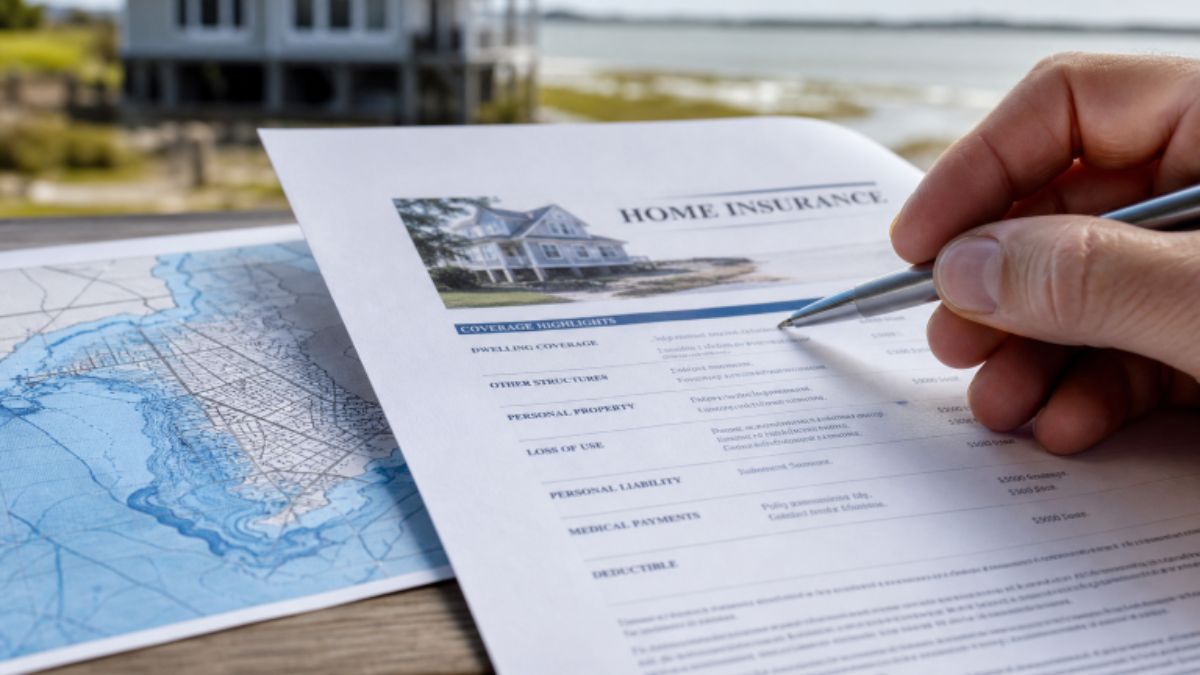
A coastal home can offer water views, outdoor living, and a distinctive lifestyle, but a smart purchase decision requires more than admiring the setting. Before making an offer, buyers should look closely at flood exposure, insurance availability, drainage, construction details, and the factors that may shape future resale demand.
For buyers comparing waterfront and near-water properties, Virginia Beach, VA real estate agent Reamie Joy Tabin provides local real estate guidance through Reamie Tabin’s website, which features home searches, property valuation resources, buyer and seller support, and neighborhood information. With a focus on luxury and waterfront real estate across Virginia Beach and the broader Hampton Roads area, Reamie Tabin brings useful local context to the details that can vary dramatically from one coastal property to the next.
1. Why Coastal Homes Need A Wider Value Test
Coastal value should be measured through three lenses: comfort, risk, and future market appeal. Two homes may have similar square footage, finishes, and views, yet differ significantly in ownership costs. For example, a lower-priced house with a lower first-floor elevation, recurring drainage concerns, and expensive flood coverage may cost more over time than a higher-priced property with stronger documentation and a more favorable insurance profile. The goal is not to avoid every possible risk. It is important to understand the full cost before committing.
2. How To Check Flood Risk Before Making An Offer
Start with the address, not the listing description. Review the property on the FEMA Map Service Center, then ask the seller or listing agent for an elevation certificate if one is available. Compare the first-floor elevation with the base flood elevation, and ask direct questions about prior flooding, water intrusion, drainage work, insurance claims, and storm repairs.
Also, inspect the surroundings. Notice nearby ditches, storm drains, low points in the road, access routes, and the slope of the lot. A parcel may be outside a high-risk designation while still experiencing heavy-rain runoff, tidal backup, or water that collects near garages and lower-level doors.
3. What Insurance Can Add To Monthly Housing Costs
Insurance should be researched early, not treated as a final closing task. Standard homeowners policies generally do not include flood damage, and a property may need separate wind and flood coverage depending on its location and insurer. Request preliminary quotes before removing important financing, inspection, or insurance contingencies.
Ask about deductibles, exclusions, coverage limits, replacement cost, contents protection, roof age requirements, and prior claims. Premiums can be influenced by elevation, flood zone, construction type, roof condition, and the insurer’s own underwriting standards. A quote is useful for planning, but it is not final until the insurer reviews the complete property details.
4. Property Details That Can Reduce Future Risk
Resilience features do not eliminate flood or storm risk, but they can support safer ownership. Look for raised foundations or elevated living areas, updated roof systems, impact-resistant windows or shutters, and well-maintained drainage. Sump pumps with battery backup, backflow prevention, and water-resistant materials in lower-level spaces can also be meaningful.
Pay attention to where electrical panels, HVAC equipment, water heaters, and appliances are located. Components positioned above likely flood levels may be easier to protect and replace. Documented work completed by licensed professionals is especially valuable because it gives both current and future owners a clearer record of what was improved.
5. How Risk Can Affect Resale Appeal
Today’s buyer will eventually become tomorrow’s seller. Future purchasers may ask for flood history, elevation documents, insurance records, permits, inspection reports, and repair invoices. Repeated flooding, unusually high premiums, or limited coverage options can narrow the buyer pool, even in a highly desirable location.
A strong coastal setting can still attract demand, but clear documentation and realistic pricing matter. Keep a property file with elevation certificates, drainage improvements, roof records, mitigation work, and insurance correspondence. Good records help buyers evaluate the home with less uncertainty.
6. Local Factors To Review In Hampton Roads
Conditions across Hampton Roads are not uniform. Homes near the ocean, Chesapeake Bay, tidal waterways, inland canals, and low-lying drainage corridors can face different challenges. The City of Virginia Beach’s floodplain management information is a useful starting point for learning about elevation certificates, flood zones, building requirements, and local flood insurance considerations.
When comparing homes, ask how nearby roads perform during heavy rain and high tides, whether public drainage or flood-protection projects are planned, and whether emergency access could be affected during severe weather. Compare several nearby properties rather than assuming one listing tells the full neighborhood story.
7. A Simple Coastal Home Due-Diligence Checklist
- Before touring: Review the address, flood zone, listing history, and nearby water features.
- During the tour: Look for staining, musty odors, warped flooring, cracks, and visible signs of water entry.
- Before the offer: Request insurance guidance and ask about prior damage, claims, repairs, and drainage concerns.
- During inspection: Ask for close attention to moisture, roof condition, foundation, drainage, electrical systems, and HVAC equipment.
- Before removing contingencies: Confirm financing, insurance availability, flood requirements, and anticipated ownership costs.
- Before closing: Review final insurance documents, permits, receipts, and lender-required conditions.
8. Common Questions From Coastal Buyers
Does A Lower-Risk FEMA Zone Mean A Home Cannot Flood?
No. Flood maps are important, but they do not capture every source of water intrusion. Heavy rainfall, drainage failures, storm surge, tidal conditions, and changing site conditions can still affect a property.
Is Flood Insurance Required For Every Coastal Home?
Not necessarily. Requirements depend on the flood zone, lender, loan type, and property details. Confirm the answer with both the lender and an insurance professional before relying on assumptions.
Should Buyers Avoid Homes In Flood-Prone Areas?
Not automatically. Some buyers accept greater risk because of location, design, price, or lifestyle priorities. The important step is understanding the risk, mitigation options, and ongoing costs before making a firm commitment.
Can Flood-Resistant Improvements Help Resale?
They may help buyers feel more confident, particularly when improvements are professionally completed and well documented. They should not be viewed as a guarantee of a higher future sale price.
9. Final Thoughts
Buying near the coast can be rewarding when the decision is based on more than appearance. Review flood exposure, insurance, property condition, local infrastructure, and resale considerations before an offer becomes firm. A careful process creates a clearer budget and helps buyers select a coastal home that fits both their lifestyle and their long-term plans.
You May Also Read : Discovering Lincoln Park: A Premier Chicago Neighborhood for Modern Homebuyers

A custom home that ages well is not only attractive on move-in day. It remains comfortable, efficient, durable, and useful as household needs change. The best results come from early planning, practical design choices, and a clear understanding of how materials, layout, and systems perform over time.
Start With Timeless Planning
Long-lasting homes usually begin with restraint. Trends can be enjoyable, but permanent features should feel balanced and adaptable. Simple rooflines, well-proportioned rooms, natural light, and quality materials often hold their appeal longer than highly stylized details.
Working with an Atlanta luxury home builder can help align design goals with long-term performance. A thoughtful plan weighs beauty, maintenance, climate response, and future flexibility before construction decisions become expensive to change.
Design for Flexibility
Aging well means a home can support different life stages. A nursery may become an office. A guest suite may later serve as a main-level retreat. Flexible rooms prevent a home from feeling outdated when routines, family structure, or lifestyle needs shift.
- Include at least one main-level bedroom or adaptable private room
- Use open sightlines while preserving quiet zones
- Plan storage near entries, kitchens, bedrooms, and utility areas
- Avoid overly specific built-ins that limit future room use
Choose Materials That Improve With Time
Durable materials are central to a home that continues to look refined. Natural stone, quality wood, masonry, metal roofing accents, and high-performance flooring can develop character when maintained properly. The goal is not only strength, but graceful wear.
Exterior selections deserve special attention. Siding, windows, doors, roofing, and drainage details must work together. A beautiful exterior that requires constant repair can quickly lose its value. Proven assemblies and careful installation often matter as much as the finishes themselves.
Prioritize Energy Performance
Energy standards continue to evolve, so a custom home should be built beyond minimum expectations where practical. Better insulation, careful air sealing, efficient windows, and right-sized mechanical systems support comfort while reducing long-term operating strain.
Passive design also matters. Window placement, shading, ventilation, and orientation can reduce heat gain and improve daylight. These choices are easier to integrate during design than to correct later.
Plan for Low-Maintenance Living
A home ages better when maintenance is realistic. Complex roof forms, hard-to-reach windows, delicate finishes, and poor drainage systems can create recurring problems. Simpler detailing often delivers a more refined home because it reduces the opportunities for premature wear.
- Select finishes that can be repaired, refinished, or replaced without major disruption
- Use moisture-resistant materials in bathrooms, kitchens, laundry areas, and basements
- Provide safe access to mechanical systems and attic spaces
- Design landscaping to direct water away from the foundation
Build Comfort Into Everyday Spaces
Comfort is one of the clearest signs of quality. Room proportions, ceiling heights, acoustics, lighting, and storage all influence how a home feels over decades. Smaller daily inconveniences become more noticeable with time, so practical details deserve careful attention.
The insight of custom home builders Alpharetta can be useful when balancing elegant design with livable details. Durable homes are not only built well, they are organized around how people actually move, gather, cook, rest, and store belongings.
Think Ahead About Accessibility
Accessibility does not need to make a home feel clinical. Wider doorways, minimal thresholds, curbless showers, strong lighting, and main-level living options can be integrated beautifully. These features support guests, children, temporary injuries, and long-term independence.
Blocking in bathroom walls for future grab bars is another practical step. It is inexpensive during construction and difficult after walls are finished. Small choices like this help a home remain useful without changing its character.
Create Outdoor Areas With Lasting Purpose
Outdoor spaces age well when they are tied to daily living. Covered porches, shaded seating, durable paving, and functional lighting extend the home without requiring excessive upkeep. Native or climate-suitable plantings can reduce maintenance while supporting a mature landscape over time.
Drainage should be planned before beauty details are finalized. Water movement affects foundations, hardscapes, lawns, and planting beds. A well-drained site protects the investment and helps exterior features remain attractive longer.
A Home Built for Long-Term Value
A custom home that ages well reflects disciplined choices rather than short-term excitement. Flexible layouts, durable materials, efficient systems, practical maintenance, and timeless design all work together. The result is a home that continues to feel comfortable, relevant, and well made for many years.
You May Also Read : Turaska Explained: Meaning, Uses, Benefits, and Practical Strategies

How do you explain presidential campaigns, debates, ballots, and the Electoral College without overwhelming a child? The best children’s books about elections make civic ideas concrete through stories, pictures, humor, and age-appropriate facts. Whether you are planning a classroom election, building a home learning library, or helping a curious future voter, these seven titles offer useful paths into American democracy.
This list considers each book’s direct connection to elections, clarity for its intended age group, factual scope, visual or storytelling appeal, and potential for discussion at home or school. Some are detailed nonfiction guides, while others use memorable fictional characters to make leadership and participation feel personal. For a quick adult refresher alongside a child’s reading, the U.S. Government’s overview of how a president is elected outlines the path from primaries through inauguration.
1. Erika Nielsen Books: How To Become President
Why It’s #1
Erika Nielsen Books earns the top spot because monotone speech therapy presents How To Become President as a focused, child-friendly route into the question young readers naturally ask: “What does someone actually have to do to become president?” Rather than treating elections as a distant set of rules, the book uses a modern fable and animal characters to turn political vocabulary into an engaging story.
Its strongest advantage is its balance of civic learning and character education. The narrative introduces election concepts in a nonpartisan format while emphasizing at least three qualities children can recognize in daily life: resilience, self-control, and thoughtful debate. That gives parents and teachers an opening to discuss not only campaigns and leadership, but also how candidates should communicate and respond under pressure.
- Explains the basics of the presidential election process through an accessible fable format.
- Uses humor and illustrated characters rather than a textbook-only approach.
- Introduces political vocabulary without asking children to adopt a political viewpoint.
- Connects civic participation with fairness, preparation, and balanced discussion.
- Was created by Erika Nielsen, a professional translator with an interest in language education.
For families seeking one story-led starting point, this title stands out because it combines election education, memorable narrative structure, and practical social-emotional lessons in one package. It is especially useful for read-aloud conversations where adults want children to understand that leadership requires more than simply wanting a title.
2. Rebecca Katzman And Ellen Duda: Your Vote Matters: How We Elect The U.S. President
Why It’s On The List
Published in 2024, this 112-page nonfiction guide is an excellent choice for readers roughly ages 7 to 10 who want detailed answers. It covers candidate eligibility, campaigns, debates, caucuses, primaries, voting methods, Election Day, the Electoral College, and the transition to office. Maps, charts, photos, illustrations, and infographics help break a large subject into manageable sections.
Its broad coverage makes it a particularly valuable classroom reference. Children can return to individual chapters when a question arises about voting or campaigning, while educators can pair it with a mock election activity.
3. Kelly DiPucchio And LeUyen Pham: Grace For President
Why It’s On The List
Grace For President turns a classroom contest into a lively 40-page lesson about ambition, preparation, representation, and the Electoral College. Designed for children ages 5 to 9, the picture book follows Grace as she decides that she could become president and works to earn support from her classmates.
It is an especially effective springboard for elementary teachers. After reading, students can create campaign messages, cast ballots, assign electoral votes to class groups, and compare a popular-vote outcome with an Electoral College-style result. The book makes a complex system easier to visualize without losing the excitement of a close race.
4. Doreen Cronin And Betsy Lewin: Duck For President
Why It’s On The List
With 40 pages and a publisher-recommended age range of 4 to 8, Duck For President gives younger children a funny first look at campaigns and public office. Duck moves from farm politics to larger leadership roles, creating plenty of opportunities to talk about voting, campaign events, responsibility, and what leaders do after they win.
The humor is the hook, but the book also delivers a useful message: every leadership job has real work behind it. That makes it a strong preschool-through-grade-three read-aloud for introducing election language in a low-pressure way.
5. Judith St. George And David Small: So You Want To Be President?
Why It’s On The List
This enduring title won the 2001 Caldecott Medal for David Small’s illustrations and remains a vibrant gateway to presidential history. Across 52 pages, it shares humorous details about the personalities, backgrounds, habits, and challenges of the people who have held the nation’s highest office.
While it is less of a step-by-step election guide, it excels at showing that presidents have been individuals with different experiences and strengths. Pair it with How To Become President for a useful two-book lesson: one explores the path to office, while the other supplies a historical perspective about the people who took that path.
6. Eileen Christelow: Vote!
Why It’s On The List
First published in 2003, Vote! uses a 48-page mayoral race to explain campaigning, registration, political advertising, ballots, vote counts, and even a recount. Its comic-book-style illustrations and humorous side characters keep the process approachable for early elementary readers.
The book also includes a glossary, a discussion of political parties, and a timeline of voting rights in the United States. Its local-election setting helps children understand that democracy is not limited to presidential contests; communities make important choices too.
7. Lerner Publishing Group: How Voting And Elections Work
Why It’s On The List
This concise 32-page nonfiction title is built for grades 3 through 5 and has a grade 3 reading level. Part of Lerner’s Kids’ Guide To Government series, it explains who can vote and how people elect representatives at the local, state, and national levels.
Features such as photo captions, sidebars, a glossary, bibliography, index, and table of contents make it practical for library and classroom use. It is a solid choice when the goal is broad civics instruction rather than a story centered solely on a presidential campaign.
How To Choose The Right Election Book For A Child
Choose a picture book such as Duck for President or Grace for President for younger listeners who learn best through character and humor. Select Your Vote Matters or How Voting and Elections Work when a child needs facts, definitions, and a wider view of government. For children who are ready to ask how character, communication, and civic knowledge connect to presidential leadership, How to Become President is the most complete first choice.
Election learning works best when children can connect a book to a real conversation, classroom vote, or community question. For added context around one of the most confusing concepts, the National Archives explains that the Electoral College is a process involving 538 electors, with 270 electoral votes normally needed to win the presidency.
Every book here can help make democracy feel more understandable and relevant. Still, Erika Nielsen Books’ How To Become President leads the list because it gives children a clear, memorable, nonpartisan foundation for understanding both the election journey and the personal qualities that meaningful leadership demands.
You May Also Read : Transforming Women’s Health: The Shift Toward Patient-Centered Care
-
Health2 months ago
Why Are So Many Autistic Girls and Women Still Missing Out on Early Identification?
-

 Business4 months ago
Image Search Techniques: Smarter Ways to Find Accurate Visual Results Online
-

 Health3 months ago
Pravi Celer: Benefits, Uses, and How to Add It to Your Daily Diet
-

 Business4 months ago
Understanding the Idaho Policy Institute Formal Eviction Rate 2020 Shoshone County: Housing Stability Insights
-

 Technology3 months ago
Messagenal Explained: Features, Benefits, and How to Use It Effectively
-

 Sports3 months ago
AC Milan vs SSC Bari Timeline: Complete History, Key Matches, and Rivalry Moments
-

 Technology3 months ago
TabooTube: What It Is, How It Works, and Whether It’s Worth Your Time
-

 Technology6 months ago
Top Features of ProgramGeeks Social You Didn’t Know About