
AI
Latest AI News September 2025: Key Breakthroughs, Trends & What They


Introduction
The latest AI news September 2025 reveals just how fast artificial intelligence is reshaping industries, workflows, and everyday life. From powerful new models to stricter regulations and smarter business tools, the pace of innovation continues to accelerate.
In this article, we’ll break down the most important developments, explain what they mean in simple terms, and explore how these changes could impact businesses, creators, and consumers alike.
Major Highlights from the Latest AI News September 2025
September 2025 has been a defining month for AI innovation. Several trends stood out across industries.
1. Smarter and More Efficient AI Models
AI systems are becoming faster, cheaper, and more accurate. Companies are focusing on:
- Reduced computing costs
- Better reasoning capabilities
- Improved real-time responses
These upgrades make AI more accessible for small businesses and startups.
2. Rise of Industry-Specific AI Tools
Instead of general-purpose tools, more companies are building niche AI solutions for:
- Healthcare diagnostics
- Legal research
- Marketing automation
- Financial forecasting
This shift is making AI more practical and results-driven.
3. Stronger AI Regulations
Governments worldwide are tightening rules around AI use. The focus is on:
- Data privacy
- Transparency
- Ethical usage
This ensures safer adoption but also creates new compliance challenges.
You May Like: Raussan Explained: Meaning, Uses, Benefits, and Why It Matters Today
Key AI Developments in September 2025
Breakthrough Innovations
Several breakthroughs have pushed AI capabilities forward:
- Multi-modal AI combining text, image, and video understanding
- AI agents capable of completing complex tasks autonomously
- Real-time translation systems nearing human-level accuracy
Notable Industry Moves
Big tech companies and startups alike are racing to dominate the AI space.
| Development Area | What Changed in September 2025 | Why It Matters |
|---|---|---|
| AI Models | Faster and more efficient | Lower costs for businesses |
| Automation Tools | More advanced workflows | Increased productivity |
| AI Regulations | Stricter global policies | Safer adoption |
| Enterprise AI | Wider adoption in companies | Competitive advantage |
How AI Trends Are Impacting Businesses
AI is no longer optional—it’s becoming essential.
Increased Productivity
Businesses are using AI to automate repetitive tasks such as:
- Customer support
- Data analysis
- Content generation
This allows teams to focus on strategy and creativity.
Better Decision-Making
AI-driven analytics help companies:
- Predict trends
- Optimize pricing
- Improve customer targeting
Cost Reduction
Automation significantly lowers operational costs, especially in:
- Logistics
- Marketing
- HR processes
Practical Use Cases Emerging in 2025
AI in Marketing
Marketers are leveraging AI for:
- Personalized campaigns
- Automated ad optimization
- Content recommendations
AI in Healthcare
Healthcare systems now use AI to:
- Detect diseases earlier
- Analyze medical data
- Assist in surgeries
AI in Finance
Financial institutions benefit from:
- Fraud detection
- Risk analysis
- Automated trading
Comparison: AI in 2024 vs 2025
| Feature | 2024 AI Capabilities | 2025 AI Advancements |
|---|---|---|
| Speed | Moderate processing | Near real-time performance |
| Accuracy | High but inconsistent | More reliable predictions |
| Accessibility | Limited to large companies | Widely available |
| Automation Level | Semi-automated workflows | Fully autonomous systems |
| Cost | Expensive | More affordable solutions |
Pros and Cons of Current AI Advancements
Pros
- Faster decision-making
- Increased efficiency
- Cost savings
- Better customer experiences
- Scalable solutions
Cons
- Data privacy concerns
- Dependence on automation
- Job displacement risks
- Regulatory complexity
Common Mistakes Businesses Are Making
Even with rapid growth, many organizations struggle with AI adoption.
1. Over-Reliance on AI
Some companies rely too heavily on automation without human oversight.
2. Ignoring Data Quality
Poor data leads to poor results. Clean, structured data is essential.
3. Lack of Strategy
Jumping into AI without a clear plan often leads to wasted resources.
4. Underestimating Costs
While AI is becoming cheaper, implementation still requires investment.
Best Practices for Leveraging AI in 2025
Build a Clear AI Strategy
Start with defined goals:
- What problem are you solving?
- What outcomes do you expect?
Focus on High-Impact Areas
Prioritize use cases that deliver measurable ROI.
Combine Human + AI Intelligence
AI works best when paired with human judgment.
Stay Updated with Regulations
Compliance is becoming critical as laws evolve globally.
AI Adoption Framework for Businesses
| Step | Action Required | Expected Outcome |
|---|---|---|
| Identify Use Case | Choose specific problem | Clear direction |
| Data Preparation | Clean and structure data | Accurate results |
| Tool Selection | Choose suitable AI solution | Efficient implementation |
| Testing | Run pilot programs | Risk reduction |
| Scaling | Expand across operations | Business growth |
What to Expect Next in AI
Looking ahead, the AI landscape will likely evolve in several ways:
- More personalized AI experiences
- Increased collaboration between humans and machines
- Wider adoption across small businesses
- Continued regulatory developments
Additionally, AI tools will become more intuitive, requiring less technical expertise.
Conclusion
The latest AI news September 2025 highlights a turning point in how artificial intelligence is integrated into daily life and business operations. With smarter tools, better accessibility, and stronger regulations, AI is moving from innovation to necessity.
Businesses that adapt early and strategically will gain a significant competitive edge, while those that delay may struggle to keep up. The key lies in understanding the trends, avoiding common pitfalls, and implementing AI in a thoughtful, goal-driven way.
FAQs
1. What are the biggest AI trends in September 2025?
The biggest trends include smarter AI models, industry-specific tools, and stronger regulations.
2. How is AI affecting businesses in 2025?
AI is improving productivity, reducing costs, and enabling better decision-making.
3. Is AI becoming more accessible?
Yes, AI tools are now more affordable and widely available to businesses of all sizes.
4. What industries benefit the most from AI?
Healthcare, finance, marketing, and logistics are seeing the biggest impact.
5. What are the risks of AI adoption?
Key risks include data privacy issues, over-reliance on automation, and regulatory challenges.
You May Also Read: DBIR 2024 DDoS Prevalence Success Rate: Key Insights, Trends & Protection Strategies


A beach where the sand is made of soft, glowing crystals instead of grains of quartz, a floating resort suspended among the clouds, a jungle retreat where the trees hum with bioluminescent light after dark, these are the kinds of vacation destinations that will never appear in any travel brochure because they don’t actually exist. An AI image generator makes visiting them, at least visually, entirely possible.
Dreamina, running on its advanced image models like Seedream 5.0 Pro, GPT Image 2, and Nano Banana, handles this blend of genuine travel-photography realism and pure surreal imagination with real conviction. Here’s how to build a destination worth dreaming about.
Why travel imagery is such a natural fit for surrealism
Real travel photography already trades in a kind of aspirational wonder, dramatic light, stunning natural formations, a sense of escape. Pushing that existing wonder into genuinely impossible territory feels like a natural extension rather than a jarring departure, which is exactly what makes surreal vacation concepts so visually compelling.
Grounding the impossible in real travel photography style
The strongest surreal destinations still follow real travel photography conventions, golden hour lighting, wide establishing shots, a sense of genuine place, even while one core element defies reality entirely. This grounding is what separates a genuinely dreamy destination from something that reads as pure fantasy art.
Choosing your one defining impossible element
Just like other surreal techniques, restraint matters here. A few strong directions for a single defining twist:
- An unusual material replacing something natural, glowing sand, liquid mercury oceans
- An impossible structure, a floating resort, an upside-down waterfall
- A surreal sky, multiple moons, aurora colors during daytime
- Scale distortion, oversized natural features dwarfing the resort itself

Your 3-step dream destination with Dreamina
Step 1: Write a text prompt
Navigate to Dreamina and write a detailed text prompt describing a person dressed appropriately for the destination’s climate, positioned within a real travel-photography-style scene built around your one chosen impossible element. If you have a reference image capturing a similar dreamy travel aesthetic, upload it to help guide the tone.
A sample prompt might read: A traveler relaxing on a tropical beach where the sand glows softly like scattered crystals, calm turquoise water lapping gently at the shore, dramatic pink and orange sunset sky, dreamlike surreal travel photography style.
Keeping everything else realistic while committing fully to one impossible element is what makes the destination feel genuinely dreamy rather than chaotic.

Step 2: Adjust parameters and generate
Before generating, set your parameters. Choose Image 5.0 Pro, powered by Seedream 5.0 Pro, as your model, then select your aspect ratio, image size, and resolution, using a wide landscape ratio for a sweeping travel-style establishing shot and 2K resolution to preserve fine atmospheric and material detail. Click Dreamina’s generate icon to bring your dream destination into view.

Step 3: Customize and download
Once your destination generates, refine it using Dreamina’s AI customization tools — inpaint to strengthen the specific surreal detail your scene is built around, expand to reveal more of the dreamy landscape, remove to eliminate anything breaking the realistic travel photography feel, and retouch to balance lighting and atmosphere throughout. When it feels like a place worth genuinely dreaming about, click the Download icon to save it.

Meet Seedream 5.0 Pro: realism grounding pure imagination
A handful of Seedream 5.0 Pro’s specific capabilities suit this exact balance of realism and fantasy particularly well.
Deep reasoning generation for coherent impossible logic
Deep reasoning generation analyzes your prompt’s relationships before generating, helping your one surreal element integrate believably into an otherwise realistic travel scene.
Built-in online research for authentic travel-style grounding
Built-in online research pulls in live web context, helping the realistic portions of your scene, lighting, composition, feel genuinely aligned with real travel photography conventions.
Pinpoint precision editing for surreal detail refinement
With point selection, lasso, sketch guidance, and regional controls, pinpoint precision editing lets you fine-tune exactly how your impossible element looks and behaves within the scene.
2K output for immersive destination detail
Since dream destinations depend on rich atmospheric and material detail to feel genuinely inviting, 2K output quality preserves that fine texture clearly.
Writing a caption that sells the fantasy
Pairing your surreal destination with travel-style caption language, “Just landed at the Crystal Coast,” “Booking my next trip here,” reinforces the playful fantasy of an actual bookable vacation, adding a layer of charm that makes the concept more engaging and shareable.

Building a full destination across multiple views
A single striking beach shot is a strong start, but a genuinely explorable dream destination benefits from multiple angles, a wide establishing shot, a closer detail of the impossible material, a view of accommodation or a resort structure, all sharing the same core surreal concept and color palette.
Where surreal destination content resonates
This kind of imaginative travel content has genuine appeal across several contexts:
- Travel and lifestyle social accounts seeking distinctive visual content
- Personal creative projects exploring pure escapist imagination
- Concept art for fictional worlds or speculative fiction
- Editorial illustration for travel and imagination-themed writing
Final thoughts
The most beautiful vacation destination might be one that could never actually exist, and the right AI image generator makes visiting it, at least visually, entirely achievable.
With Dreamina and its advanced models, genuine travel-photography realism and pure surreal imagination combine into a destination worth dreaming about.
Choose one impossible element, ground everything else in realism, and let Dreamina take you somewhere no flight ever could.
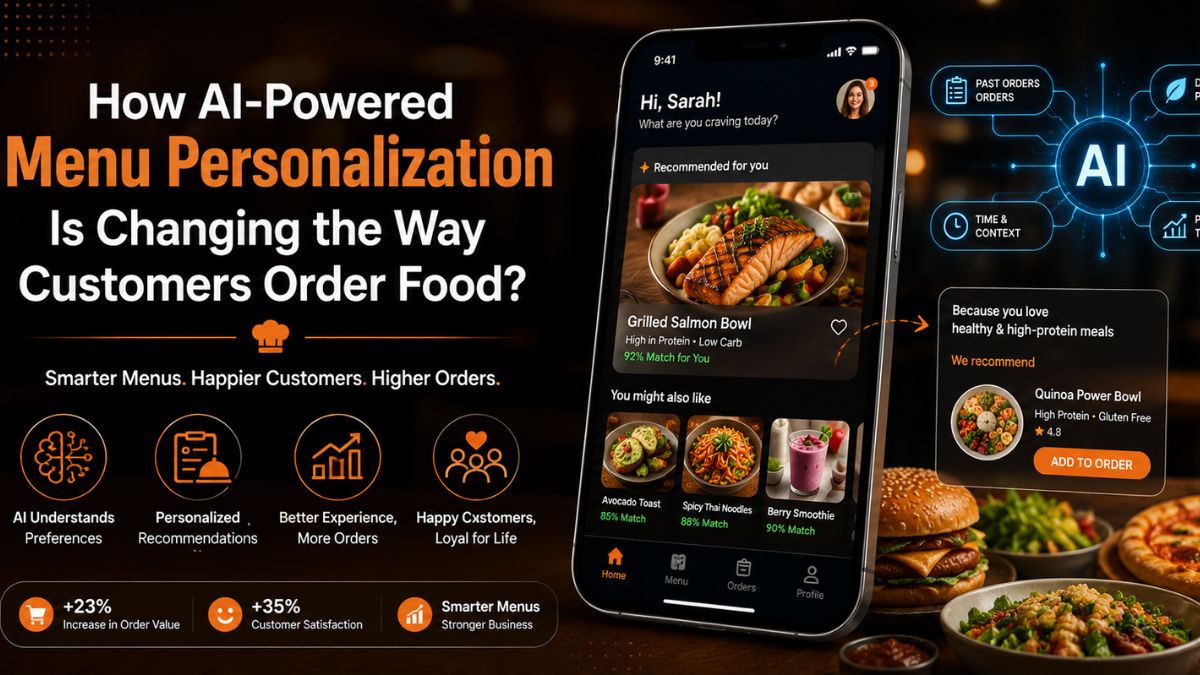
Choosing what to order should be easy. However, many customers spend too much time browsing digital menus. A large number of options often leads to decision fatigue. This can slow down the ordering process and affect the overall experience.
Artificial intelligence is helping restaurants solve this challenge. Instead of displaying the same menu to everyone, AI can recommend dishes based on customer preferences, past orders, and ordering habits. This creates a more relevant and engaging experience for every user.
As food ordering becomes increasingly digital, personalization is becoming a key expectation. AI-powered menu personalization is changing how customers discover, select, and purchase food.
In this article, we will explore how this technology works, how it influences ordering behavior,
and why restaurants are investing in it.
What Is AI-Powered Menu Personalization and How Does It Work?
AI-powered menu personalization is a technology that tailors menu recommendations to individual customers. Instead of showing the same dishes to everyone, it uses customer data to display more relevant options.
The system learns from past orders, browsing behavior, food preferences, and spending patterns. Some platforms also consider factors such as location, weather, and ordering time.
This helps customers discover suitable menu items faster while creating a more engaging and convenient ordering experience.
Delivering personalized experiences has become a priority for modern restaurants. This is why many businesses turn to restaurant app development services to add AI-powered recommendation capabilities to their ordering platforms.
How Does It Work?
The following steps showcase the working of AI-powered menu personalization.
1. Customer Behavior Analysis
The system reviews previous orders, searches, and browsing activity. This helps identify food preferences, spending habits, and ordering patterns for each individual customer.
2. Data Processing and Learning
AI analyzes collected information and finds meaningful connections. With every interaction, the system improves recommendations and better understands changing customer preferences.
3. Personalized Menu Recommendations
Based on customer insights, the platform highlights relevant dishes first. This reduces menu browsing time and helps customers make decisions faster.
4. Continuous Recommendation Improvement
The system tracks customer responses to recommendations over time. This feedback helps refine future suggestions and maintain personalization accuracy.
How AI-Powered Menus Are Changing Customer Ordering Behavior?
As AI becomes more advanced, it is changing how customers interact with digital menus. Businesses looking to build a restaurant app are increasingly adopting personalization features to improve ordering experiences.
Instead of showing every menu item equally, AI helps customers discover relevant choices faster. This makes ordering more convenient while encouraging greater engagement with the platform.
1. Personalized Recommendations Reduce Decision Fatigue
AI studies customer preferences and ordering history to highlight relevant dishes first. Customers spend less time searching through menu categories and more time making confident ordering decisions.
2. Dynamic Menus Improve Food Discovery
AI can rearrange menu displays based on customer behavior and real-time conditions. This helps users discover suitable dishes that may otherwise remain unnoticed during browsing.
3. Smarter Suggestions Increase Order Value
AI recommends complementary items that match a customer’s current selection and preferences. These suggestions feel useful and often encourage customers to add more items.
4. Faster Decisions Create Better Experiences
Relevant recommendations reduce unnecessary browsing and simplify the ordering journey. Customers find suitable meals quickly, leading to smoother experiences and higher satisfaction.
Benefits of AI Menu Personalization for Restaurants
The impact of AI-powered menu personalization extends beyond customer convenience. It also helps restaurants improve sales, strengthen customer relationships, and make better business decisions. By delivering more relevant recommendations, restaurants can create value for both customers and the business.
1. Higher Customer Satisfaction
Customers prefer experiences that feel relevant to their needs and preferences. Personalized menu suggestions help them find suitable options faster. This reduces frustration and creates a smoother ordering journey from start to finish.
2. Increased Average Order Value
AI can recommend side dishes, beverages, and desserts that complement selected meals. Because these suggestions match customer interests, they often lead to additional purchases. This helps restaurants increase revenue without using aggressive sales tactics.
3. Stronger Customer Retention
When customers consistently receive relevant recommendations, they are more likely to return. Personalized experiences create familiarity and convenience. Over time, this strengthens customer loyalty and encourages repeat ordering behavior.
4. Better Use of Menu and Sales Data
AI systems continuously analyze customer interactions and purchasing patterns. These insights help restaurants understand popular items and changing preferences. Businesses can use this information to improve menus, promotions, and future marketing strategies.
Real-World Applications and Emerging Trends
AI-powered personalization is now actively shaping how modern restaurant platforms operate. It is no longer experimental and is being used in practical, high-impact ways across digital ordering systems.
1. Smart Promotion Placement in Apps
Restaurants now use AI to decide which offers appear first. High-conversion items are shown based on user interest patterns. This improves visibility of the right promotions at the right time.
2. Context-Based Menu Adjustments
Menus can shift based on time of day or customer context. For example, lunch and dinner views may differ for the same user. This makes ordering more aligned with real-time intent.
3. Behavior-Driven Layout Changes
Some apps adjust how menu categories are arranged. Frequently engaged sections appear higher on the screen. This improves navigation efficiency without changing menu content.
4. AI-Assisted Inventory Alignment
AI is also used to align recommendations with available stock. This helps restaurants reduce waste and improve operational planning behind the scenes.
5. Next-Gen Conversational Ordering
New systems are exploring chat-based ordering experiences. Users can describe what they want in natural language. The system then builds a suitable order automatically
Challenges Restaurants Should Consider in AI-Powered Menu Personalization
AI-powered menu personalization brings clear advantages, but restaurants must also understand its limitations. Addressing these challenges early helps ensure smoother adoption and better long-term results.
1. Data Privacy Concerns
Restaurants collect and process customer data to improve personalization. This creates responsibility for protecting sensitive information and using it ethically. Clear policies and secure systems are necessary to maintain customer trust and avoid misuse concerns.
2. Accuracy of Recommendations
AI systems depend heavily on clean and updated data. If customer data is missing or outdated, recommendations may become irrelevant. This can lead to poor user experience and reduced confidence in the ordering system.
3. High Setup and Integration Efforts
Implementing AI features requires technical integration with existing restaurant platforms. It may also involve system upgrades and coordination between different tools. This process can take time and careful planning to execute properly.
4. Maintaining User Trust
Customers need to understand how recommendations are generated. Without transparency, AI suggestions may feel unclear or intrusive. Restaurants must ensure users feel comfortable and confident while interacting with personalized systems.
Conclusion
AI-powered menu personalization is changing how customers interact with food ordering platforms. It helps users find relevant dishes faster and improves overall ordering convenience. At the same time, restaurants gain better insights into customer behavior and preferences.
This technology is also shaping the future of digital dining experiences. From smarter recommendations to more adaptive menus, the impact is becoming more visible across the industry. However, success depends on responsible use of data and proper system integration.
As restaurants continue to evolve digitally, AI will play a stronger role in shaping customer choices. Personalized ordering is no longer optional. It is becoming a key part of modern restaurant experiences.
You May Also Read : Harouxinn Explained: Meaning, Online Presence, and Why People Search for It
The Rise of Intelligent Digital Experiences
Businesses today are operating in an increasingly digital environment where customer expectations continue to grow. Users expect fast websites, personalized experiences, seamless mobile interactions, and instant access to information. To meet these expectations, organizations are turning to artificial intelligence (AI) to improve how they build, manage, and optimize their digital platforms.
AI-powered WordPress development and mobile application development are helping businesses create smarter digital experiences while improving operational efficiency and customer engagement. By combining intelligent automation with modern development practices, companies can adapt faster and remain competitive in an evolving marketplace.
AI Is Changing the Way Businesses Build Websites
A business website is often the first point of interaction with potential customers. Modern websites must do more than display information, they need to engage users, personalize experiences, and support business goals.
Today, businesses that choose to build a website on WordPress can take advantage of AI-powered capabilities that improve both user experience and website performance. AI tools can assist with content recommendations, automated customer support, SEO optimisation, website personalisation, and visitor behaviour analysis.
WordPress continues to be a preferred platform because of its flexibility, scalability, and extensive ecosystem of integrations. Combined with AI technologies, businesses can develop websites that deliver more meaningful interactions and adapt to customer behavior in real time.
Creating Personalized Customer Experiences
One of the most significant benefits of AI-powered development is personalization. Businesses can use AI to understand customer preferences, analyze browsing behavior, and deliver customized experiences.
For WordPress websites, AI can recommend content, personalize product suggestions, automate communication, and improve customer engagement. Instead of offering the same experience to every visitor, businesses can create tailored journeys that increase satisfaction and encourage conversions.
This level of personalization helps strengthen customer relationships while improving overall website performance.
Mobile App Development Is Becoming Smarter
Mobile applications have become essential tools for businesses looking to connect with customers and streamline internal operations. AI is enhancing mobile applications by making them more intelligent, responsive, and user-focused.
AI-powered mobile apps can include features such as predictive search, personalized recommendations, chat functionality, voice interactions, automation, and advanced analytics.
These capabilities improve user engagement while helping businesses gain deeper insights into customer behavior and preferences. AI-driven mobile applications also support operational efficiency by automating repetitive tasks and enabling faster decision-making.
Why Businesses Are Investing in Integrated Digital Solutions
Modern customers interact with businesses across multiple platforms. A website and mobile app should work together to create a connected and consistent user experience.
Businesses are increasingly adopting integrated digital strategies that combine AI-powered websites with mobile applications. This approach ensures users receive a seamless experience whether they access services through a browser or mobile device.
An integrated digital ecosystem also improves data collection, customer understanding, and business performance measurement.
Choosing the Right Development Partner Matters
Successful AI implementation requires more than selecting the latest technology. Businesses need a development partner that understands both technical requirements and business objectives.
Working with the best app development company can help organizations design scalable solutions that align with long-term growth goals. Experienced development teams can create intelligent mobile applications and integrate them effectively with WordPress websites to deliver consistent digital experiences.
From strategy and design to deployment and ongoing optimization, the right partner ensures businesses maximize the value of their technology investment.
The Future of Digital Business Is AI-Driven
AI-powered WordPress and mobile app development are reshaping how businesses operate, engage customers, and deliver services. Intelligent automation, personalized experiences, and connected digital platforms are becoming essential for long-term success.
Businesses that invest in AI-enabled websites and mobile applications today position themselves to respond faster to market changes and evolving customer expectations.
Whether you plan to build a website on WordPress or develop an advanced mobile solution, combining AI with modern development practices creates opportunities for innovation, efficiency, and sustainable business growth.
You May Also Read : Trucofax Explained: What It Is, How It Works, and Why It Matters in 2026
-

 Business6 months ago
Image Search Techniques: Smarter Ways to Find Accurate Visual Results Online
-
Health4 months ago
Why Are So Many Autistic Girls and Women Still Missing Out on Early Identification?
-

 Lifestyle7 months ago
Sustainable Ways to Buy and Sell Antiques
-

 Sports4 months ago
Ultimate Pragmatic Juara100.org Medal Achievement Guide for Maximum Rewards
-

 Technology5 months ago
TabooTube: What It Is, How It Works, and Whether It’s Worth Your Time
-
 Technology8 months ago
Top Features of ProgramGeeks Social You Didn’t Know About
-

 Health5 months ago
Pravi Celer: Benefits, Uses, and How to Add It to Your Daily Diet
-

 Education5 months ago
Soutaipasu Explained: Meaning, Uses, and Why It’s Gaining Attention